I’m terrified of sharks. Can I go spearfishing?
Sharks are a good sign
Here's something no one expects a spearfishing guide to say: I wish there were more sharks in Hawaii. Sharks mean a healthy reef. A coastline with apex predators is a coastline where the whole food chain is working.
And contrary to what Jaws and Shark Week have done to your imagination, the water here isn't exactly infested.
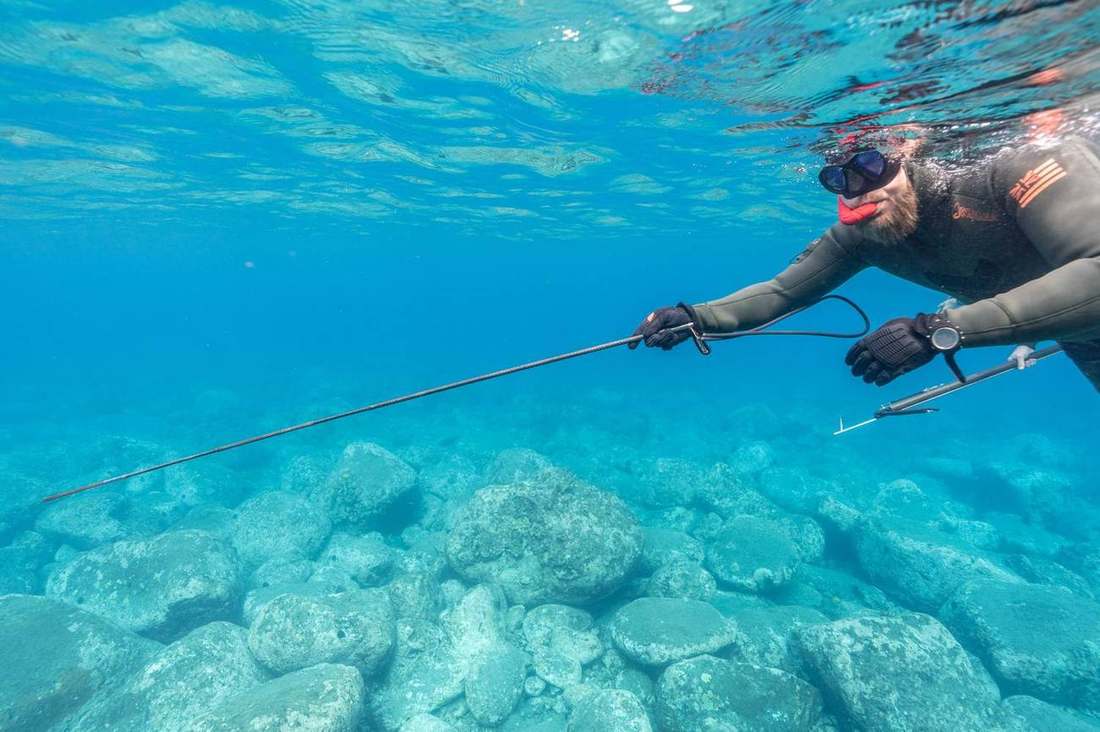
Why divers almost never get bitten
Look at where shark bites actually happen: murky water, river mouths, surf breaks, storm runoff. Almost always, someone is splashing at the surface, unable to see below, and unaware of what's around them.
To a shark, that splashing silhouette is a mystery. Sharks don't have hands to investigate something strange, so the curious ones investigate with their mouths. That's the classic bite story, and it has nothing to do with what we do.
A spearfisher wears a mask. We're below the surface, calm, with full view of our surroundings. We see the shark. The shark sees us. Mystery solved, for both parties, and the shark almost always loses interest.
We speak shark body language
Sharks tell you what they're thinking if you know how to read them. Swimming faster, arching the back, dropping the pectoral fins: that's agitation, and it means give this animal space. Slow, relaxed cruising is just a shark commuting. Your guide reads this the way you read traffic.
Rule one: never yield your catch
Sometimes a shark wants the fish on our dive float. We don't hand it over. If a shark snatches your catch, you've taught it that spearguns mean free food, and the last thing anyone wants is sharks that come swimming when they hear a speargun fire.
So we defend the catch, and the method sounds crazier than it is: extend the speargun and let the curious shark bump its nose into the tip with its own momentum. A shark's snout is packed with sensitive electroreceptors. One bump is usually the whole conversation. The shark decides this meal is more trouble than it's worth and moves on.
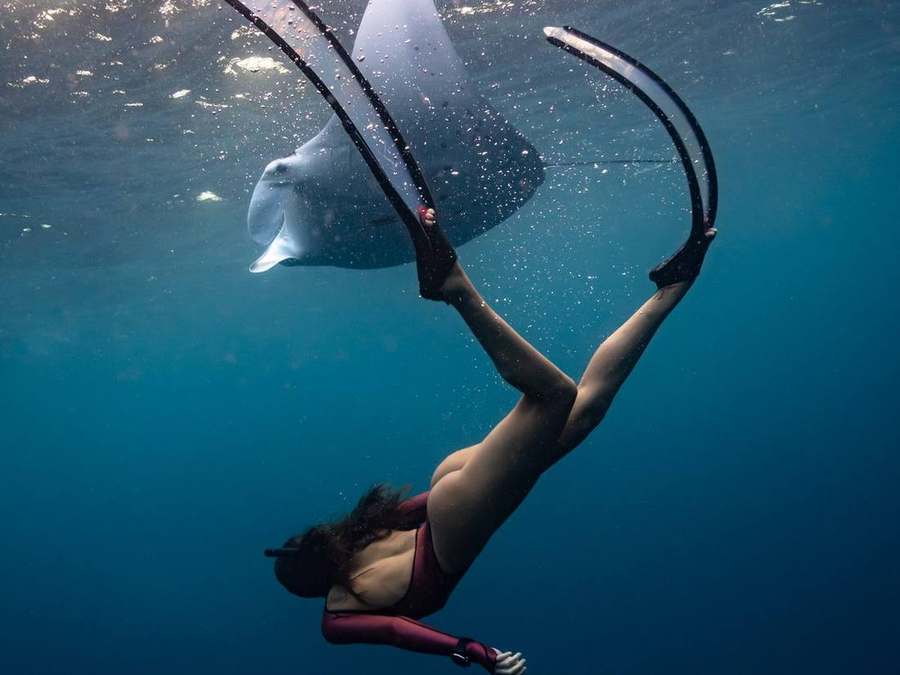
The sharks you'd actually meet here
Diving from the Kona shoreline, the shark we occasionally see is the whitetip reef shark: small, mellow, and about as interested in you as a parked car. They nap under ledges all day.
The sharks that make the news are tiger sharks, one of the largest species in Hawaiian waters. In thousands of dives here over many years, I've seen maybe a dozen. Each one was an event we still talk about, not an emergency.
Confidence is the whole trick
When a shark does come looking, the answer is posture. Face the animal. Hold eye contact. If it keeps closing, move calmly toward it. In the shark's world, prey flees and predators face you, so facing it puts you in the wrong category to bite. Curiosity satisfied, it glides off, and you just collected the best story of your trip.
See you in the water, where we always see something cool and amazing. Sometimes even sharks.
See it for yourself
Guided spearfishing on the Kona coast. Complete beginners welcome.
Group Dive · $299Meet the Fish