Big Island Snorkeling Map: Kona Coast Spots, Rules and Lessons

Most people who snorkel the Kona side see the reef from the top, and that's a good morning. This guide is about doing it well: where the public spots are, what the rules and facilities are at each one according to the agencies that run them, what the water is doing, and how to get below the surface.
The Kona coast, mapped
Every pin is a well-known public snorkeling spot. The seafloor is drawn from sonar data, so you can see how close deep water sits to each one. That closeness is the same reason nothing we do needs a boat.
Tap a pin for the facts on that spot. Tap open water to read how deep it is.


Why the water here is calm and clear
The Kona side of the Big Island sits in the wind shadow of Mauna Kea and Mauna Loa, so the water is calm and clear most mornings, year-round. The trade winds arrive from the northeast and the two volcanoes block them.

sheltered side
The ten spots at a glance
Only four beaches on the island's west shore are on the State's lifeguarded list: Spencer, Hāpuna, Kahaluʻu and Laʻaloa (Magic Sands), all staffed daily from 9:30 AM to 4:45 PM. Three of them are on this map.
| Spot | Lifeguard | Restrooms | Fee for visitors | No-take reserve |
|---|---|---|---|---|
| Kaunaʻoa (Mauna Kea Beach) | Not listed | Yes | Not stated | No |
| Hāpuna Beach | Yes, daily | Yes | $5 per person + $10 per vehicle | No |
| Waialea Bay | No | Sources differ | Not stated for this section | Yes |
| Kīholo Bay | Not listed | Portable toilets | None | No |
| Kua Bay | No | Yes | $5 per person + $10 per vehicle | No |
| Kamakahonu (Kailua Pier) | Not listed | Yes | Not stated | No |
| Magic Sands | Yes, daily | Yes | Not stated | No |
| Kahaluʻu | Yes, daily | Yes | $12 parking per 4 hours | No |
| Kealakekua Bay | No | At Nāpōʻopoʻo only | None | Yes |
| Two Step | Not listed | Portable toilets | None stated at the ramp | No |
The public spots, one by one
These are well-known public sites. Tap any photo to see it larger. What follows for each is what the managing agency states, with a link, so you can check it before you go. Conditions change daily and none of this replaces looking at the water.
1. Kaunaʻoa (Mauna Kea Beach)
Kaunaʻoa is the beach in front of the Mauna Kea Beach Hotel: a private resort with public shoreline access. The County's shoreline guide says public parking is by pass at the main resort entrance and passes are limited. Restrooms and showers are listed, and it is open sunrise to sunset. It is not on the State's lifeguarded-beach list.
2. Hāpuna Beach
Hāpuna is a wide sand beach in South Kohala and one of only four west-shore beaches with lifeguards on the State's list, on duty daily from 9:30 AM to 4:45 PM. It is a State recreation area: non-residents pay $5 per person plus $10 per vehicle, by credit card only. It is open 7:00 AM to 7:30 PM and the gates close at 8:00 PM. The State's page warns of "dangerous rip currents and pounding shore breaks during periods of high surf" and says waves over 3 feet are for experts.
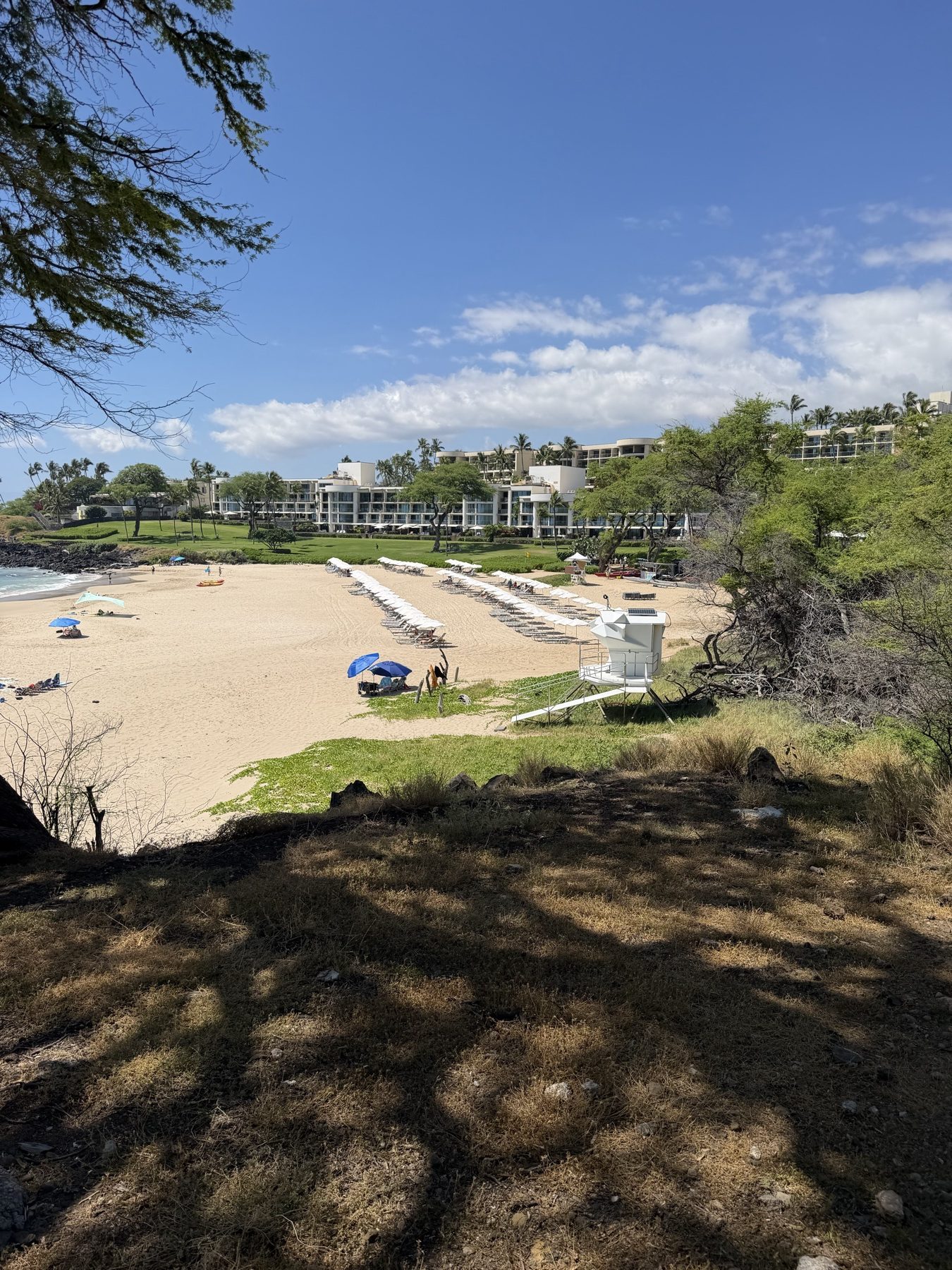
3. Waialea Bay (Beach 69)
Waialea is a State no-take reserve: a Marine Life Conservation District since 1985, covering 35 acres, where taking marine life and feeding fish are prohibited. The State describes it as a somewhat sheltered bay with high surf in winter, and says no lifeguards are on duty. Sources disagree on facilities, so don't count on any.
4. Kīholo Bay
Kīholo is a State park reserve and the State calls it remote: portable toilets, no drinking water and no other facilities. It is open 7:00 AM to 7:00 PM with no entrance fee. The bay is a Fisheries Management Area where fish feeding is prohibited.
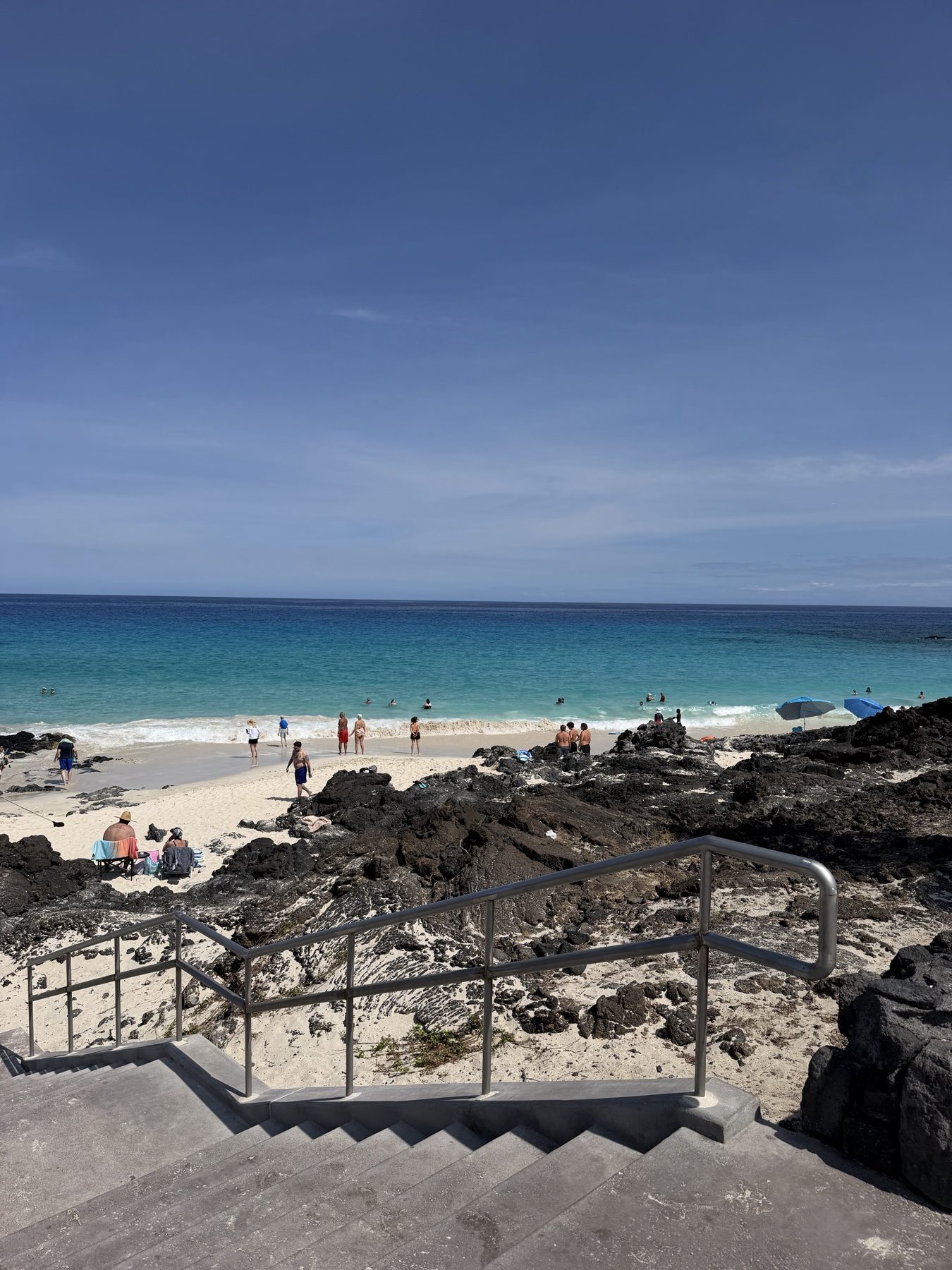
5. Maniniʻōwali Beach (Kua Bay)
Kua Bay sits inside Kekaha Kai State Park. Non-residents pay $5 per person plus $10 per vehicle, a fee that has applied to this section since January 2026. The park is open 8:00 AM to 6:30 PM and the gates close at 7:00 PM. The State's page says there are no lifeguard services and warns of "dangerous rip currents and pounding shore breaks during periods of high surf."
6. Kamakahonu Beach (Kailua Pier)
Kamakahonu is the small beach beside Kailua Pier in the middle of town. Restrooms and showers are at the pier; there is no on-site parking. It lies in the Kailua Bay Fisheries Management Area, where fish feeding is prohibited, and the County's guide flags boat traffic at the pier. It is not on the State's lifeguarded-beach list.
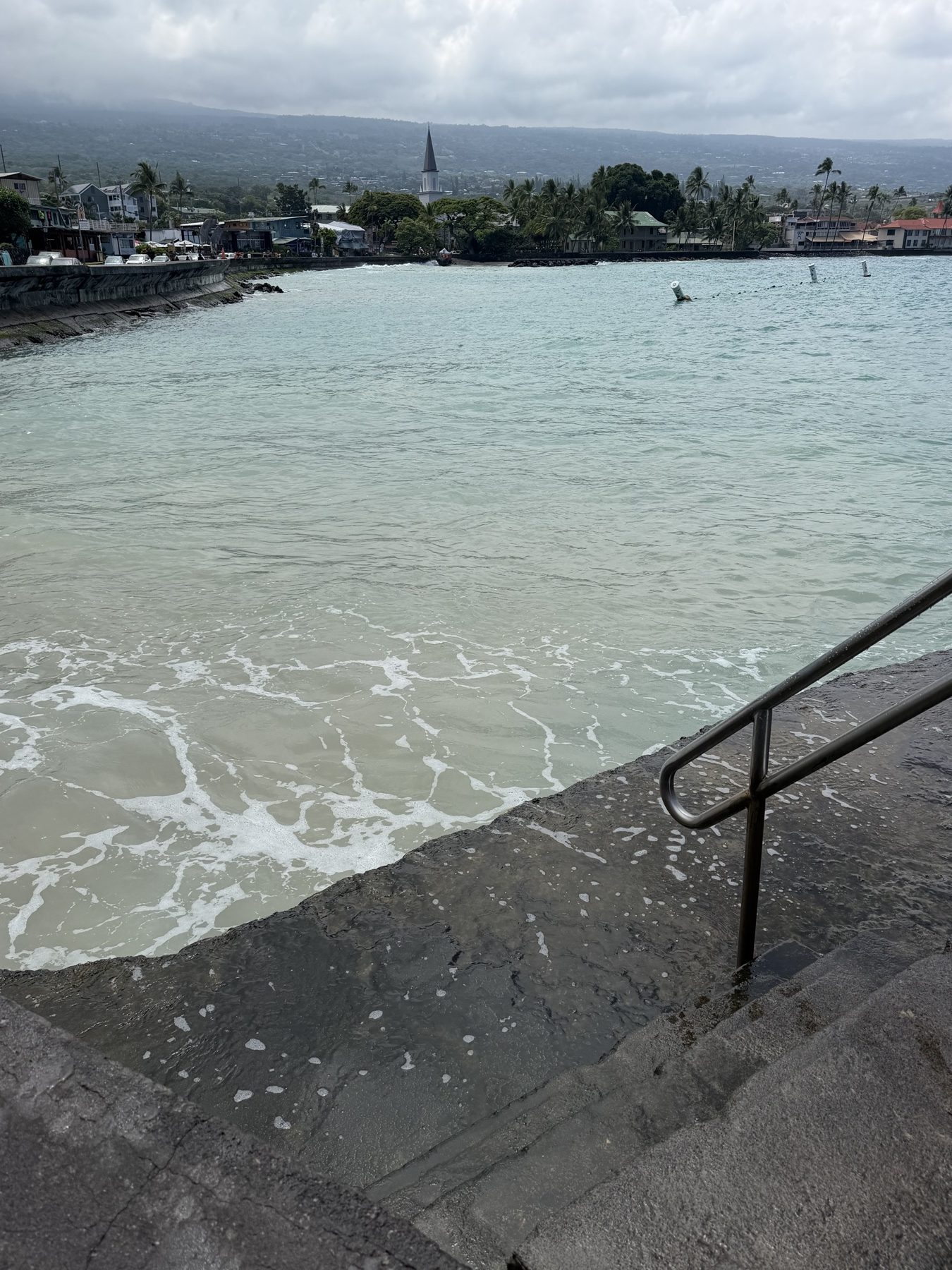 Steps into the water at the Kailua seawall.
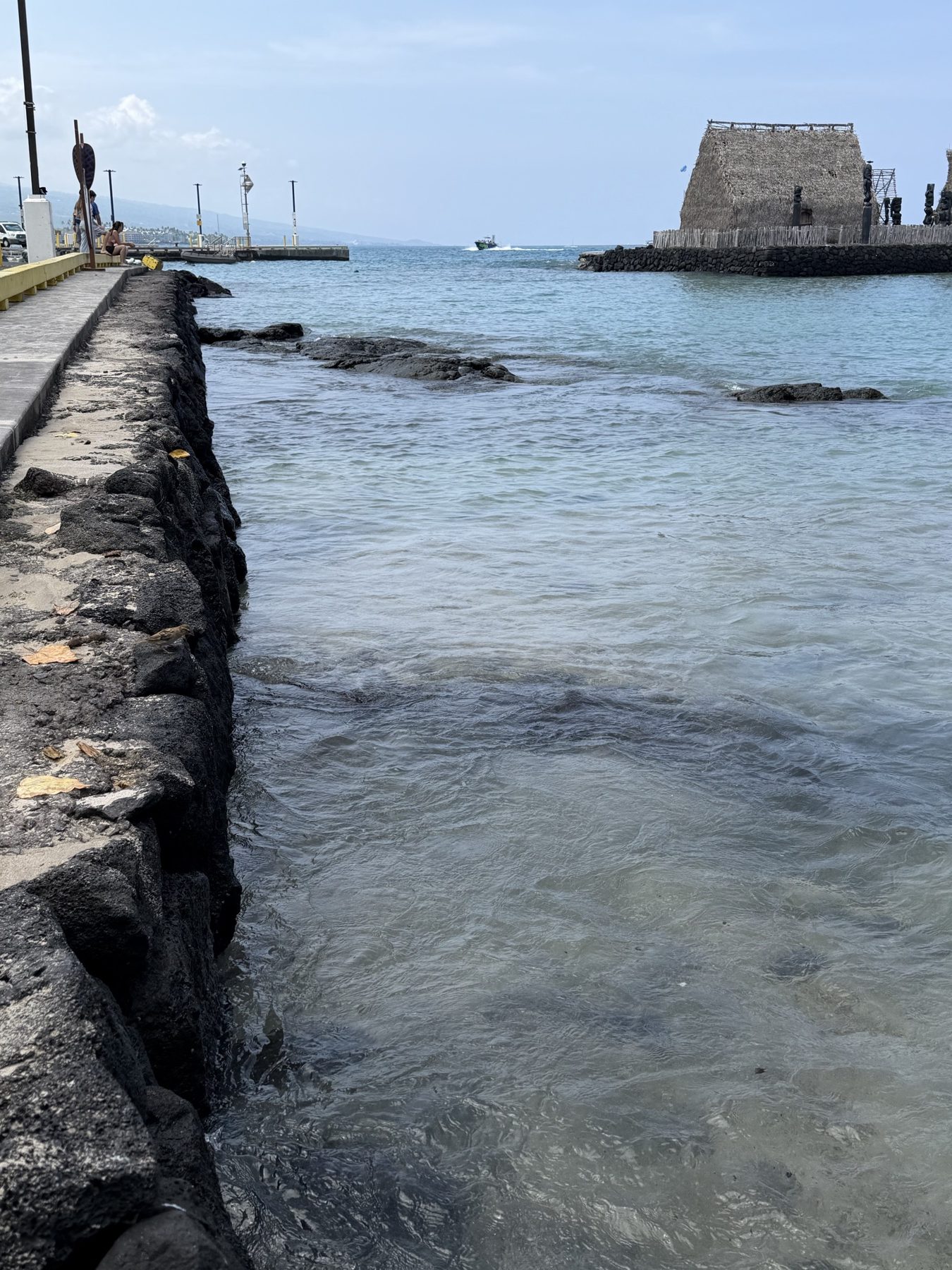 Kamakahonu, with Ahuʻena Heiau across the water.
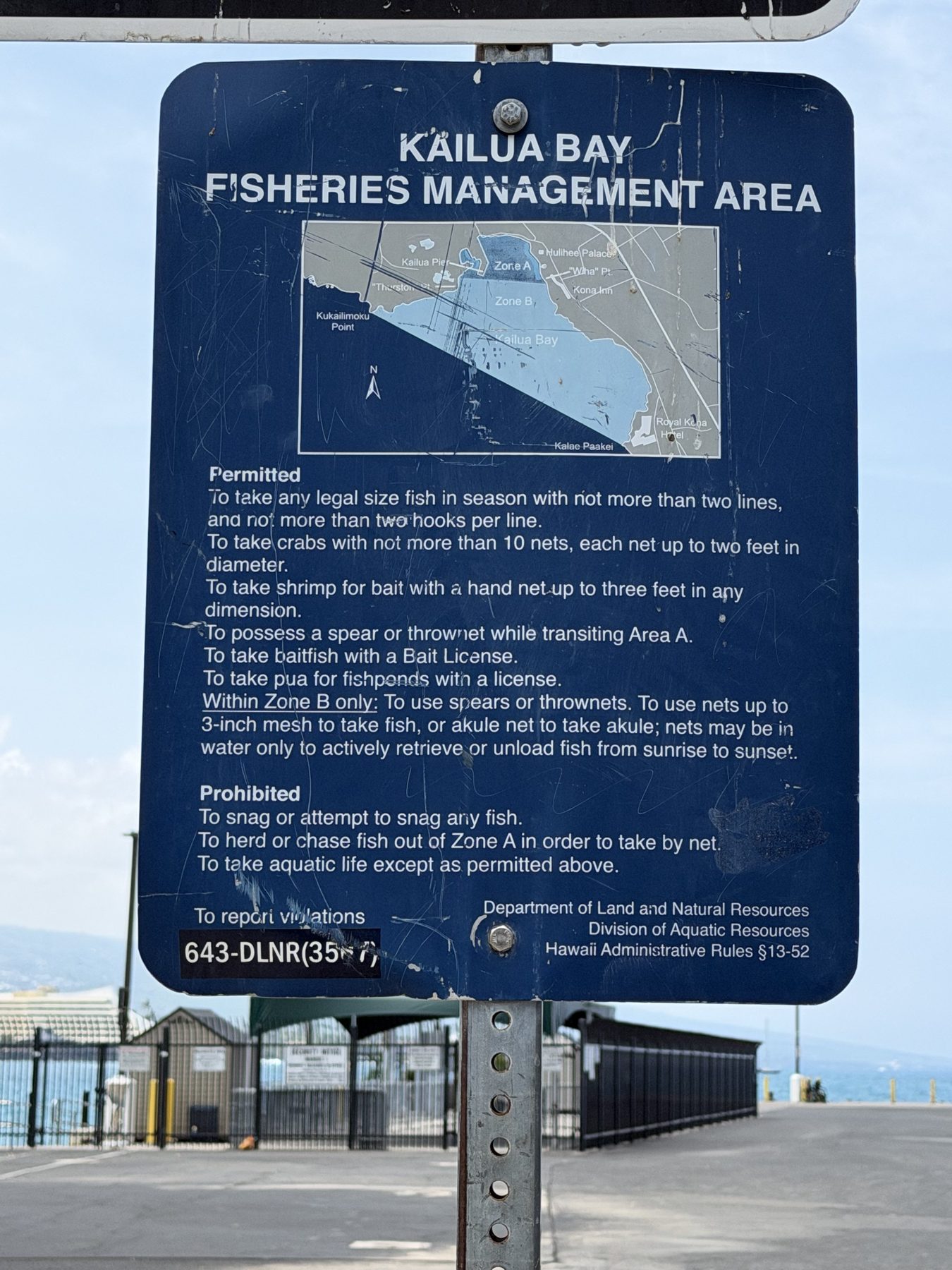 The State's Kailua Bay Fisheries Management Area sign at the pier.
7. Magic Sands (Laʻaloa Beach Park)
Magic Sands, officially Laʻaloa Beach Park, is another of the four lifeguarded west-shore beaches, staffed daily from 9:30 AM to 4:45 PM. The County lists parking, restrooms, showers and drinking water.
8. Kahaluʻu Beach Park
Kahaluʻu is the other lifeguarded snorkel beach near town, staffed daily from 9:30 AM to 4:45 PM, with restrooms, showers and parking. Two things catch visitors out: the park is closed until 10:00 AM on the first Thursday of every month, and it closed for ten days in May 2026 to protect coral spawning. The Kohala Center, which runs the reef education program there, lists non-resident parking at $12 per four hours.
9. Kealakekua Bay (Kaʻawaloa)
Kealakekua Bay is the oldest no-take reserve on this coast: a Marine Life Conservation District since 1969, covering 315 acres. The snorkeling people come for is at Kaʻawaloa, by the Captain Cook Monument, and you can't simply drive to it. The State says to reach it on foot by trail or with a permitted kayak tour, and every vessel needs a State Parks permit to cross the bay. The State says conditions become dangerous during high surf and southern storms, and that no lifeguards are on duty.
10. Hōnaunau Bay (Two Step)
Two Step is the local name for the lava-shelf entry at Hōnaunau Bay, beside Puʻuhonua o Hōnaunau National Historical Park. The National Park Service is clear that it sits outside the park, that it is a boat ramp first, and that snorkelers may not enter the water at Keoneʻele Cove inside the park. Parking is limited and the County lists portable toilets. It is not on the State's lifeguarded-beach list.
Water temperature by month
NOAA's tide station at Kawaihae harbor recorded monthly averages from about 78°F in February to about 82°F in August and September, based on hourly readings from 2016 to 2025. It is a harbor sensor on the Kohala coast, so treat it as a guide to the season, not a forecast for any one beach.
Rules that protect the reef
Sunscreen. Since January 1, 2021, Hawaiʻi has banned the sale of sunscreens containing oxybenzone or octinoxate (Hawaiʻi Revised Statutes §342D-21). The law covers what stores can sell, not what you wear, but the reef doesn't know the difference. At Kahaluʻu, The Kohala Center asks for mineral sunscreen only.
Wildlife. NOAA Fisheries asks you to stay at least 10 feet from sea turtles and 50 feet from Hawaiian monk seals, on land and in the water. Federal law sets 50 yards for spinner dolphins and 100 yards for humpback whales.
Coral. The State's Division of Aquatic Resources asks you not to stand on, touch or trample coral, and to watch where your fins go.
No-take reserves. In Kealakekua Bay and Waialea Bay, taking any marine life and feeding fish are both prohibited.
Why most snorkelers stay at the surface
It isn't lungs or fitness. It's pressure. Every 33 feet of seawater adds one atmosphere, so ten feet down the pressure on your eardrums is already about 30 percent higher than at the surface. That squeeze is what turns people around.
Slide down. Every 33 feet of seawater adds one atmosphere of pressure, and the air in your ears and mask shrinks to match.
The fix is a technique called equalizing: adding a little air to the space behind your eardrum as you go down, so the pressure never builds. Nobody teaches it to snorkelers, which is why most never get past the first few feet.
Three skills that get you under
1. Breath
Safe breath-hold fundamentals: how to prepare, how to relax, and how to extend your comfortable time underwater.
2. Dive form
Efficient duck dives and streamlined finning, so every descent costs less oxygen and feels easy instead of frantic.

3. Equalizing
Clearing your ears properly, so depth stops hurting and starts opening up.
Snorkeling lessons in Kona: Snorkel Pro
Snorkel Pro is a 3-hour guided ocean skills session in Kona that teaches snorkelers breath-hold, dive form and ear equalization, so you can explore below the surface instead of watching the reef from above. It costs $199 per person with all gear included, and there is no spearfishing involved.
- Land session: breathing, safety and technique at our Kona Coastline Training Facility
- Surface skills: duck dives, finning and your first equalized descents, with a coach beside you
- Guided exploration: put it together on the reef

Sightseeing from the surface. You leave with photos.
Skills instruction in a small group, max 8, with a coach. You leave with photos and a skill you keep.
You should be a confident swimmer and comfortable snorkeling in the open ocean, but you don't need to be an athlete. If you're not comfortable putting your face in the water yet, start with a calm beach day and come see us after. If you want to hunt, book the Group Dive instead.

- Seafloor and land: Main Hawaiian Islands Multibeam Bathymetry Synthesis, 50-meter grid, Hawaiʻi Mapping Research Group, University of Hawaiʻi at Mānoa, served by PacIOOS.
- Lifeguards: List of Lifeguarded Beaches, Hawaiʻi Department of Health ocean safety site, dated June 15, 2026.
- Spot rules, hours and fees: Hawaiʻi Division of State Parks, Hawaiʻi Division of Aquatic Resources, County of Hawaiʻi Parks and Recreation and Planning, and the National Park Service. Each spot's card on the map links to its page.
- Water temperature: NOAA tide station 1617433, Kawaihae, hourly water temperature, 2016 to 2025.
- Wildlife distances: Viewing Marine Wildlife in Hawaiʻi, NOAA Fisheries. Sunscreen: HRS §342D-21. Coral: Hawaiʻi Division of Aquatic Resources.
- Pressure and depth: How does pressure change with ocean depth?, NOAA National Ocean Service.
- Trade winds and the sheltered leeward side: Climate of Hawaiʻi, National Weather Service Honolulu.
Go below the surface
Snorkel Pro: three hours, three skills, $199 with all gear included.
Snorkel Pro · $199Group Dive · $299